



 Back to overview
Alpinamed Creatine Monohydrate 100% pure
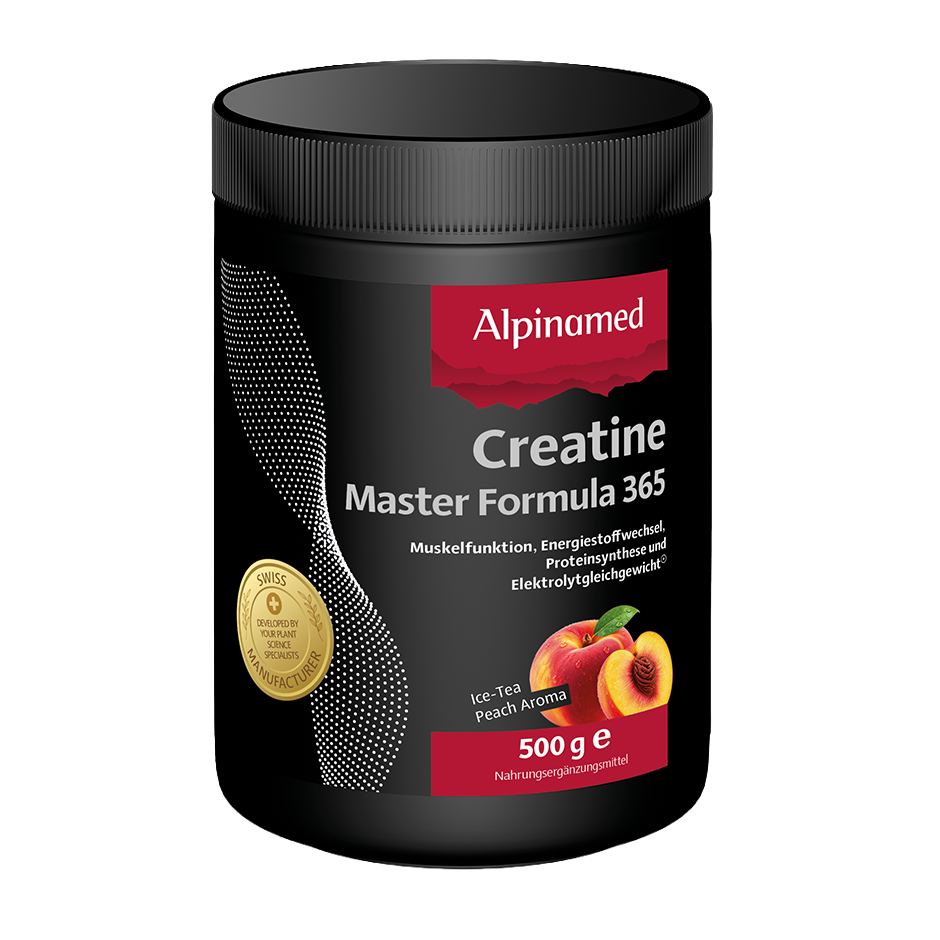
Alpinamed Creatine Monohydrate 100% pure focuses on the essentials. It is high-purity, laboratory-tested, micronized creatine monohydrate - no frills. One spoon (included) per day already provides 3 g creatine.
Food supplement, 500 g.
Manufactured in Switzerland. Available in Swiss pharmacies and drugstores, or delivered directly to your home via our online shop.
 vegan / gluten-free / lactose-free / preservative-free
With creatine, purity matters just as much as quantity
Depending on the quality of the raw material and the manufacturing process, creatine may contain undesirable by-products. That is why Alpinamed goes one step further: every batch of our creatine products is tested in our laboratory in Switzerland for purity and relevant undesirable by-products, including creatinine, dicyandiamide and dihydrotriazine. This ensures that our creatine products contain exactly what we promise: high-purity creatine in the trusted, proven Alpinamed quality.
Neutral taste
The neutral-tasting creatine powder can be easily integrated into your daily diet, dosed individually, and is particularly suitable for anyone who prefers pure creatine without additional active ingredients.
Creatine increases physical performance in successive bursts of short-term, high-intensity exercise. The beneficial effect is obtained with a daily intake of 3 g creatine. Creatine monohydrate is the most extensively studied form of creatine; to date, more than 70,000 studies on creatine have already been published. Thanks to its neutral taste, Alpinamed Creatine Monohydrate 100% Pure can simply be stirred into water, a protein shake or another drink and integrated into the daily routine.
The selection of raw materials and the manufacturing of Alpinamed Creatine Monohydrate 100% pure are subject to a stringent testing and quality assurance process. The high-quality raw materials are tested in extensive laboratory analyses before the ready-to-use product is placed on the market.
Creatine monohydrate
As a food supplement, dissolve 1 scoop (included) in water daily and drink.
| What is Alpinamed Creatine Monohydrate 100% pure? | Alpinamed Creatine Monohydrate 100% pure is a food supplement for adults who train intensively and want to tailor their diet to their physical activity. It contains particularly pure, readily soluble creatine. |
| Can Alpinamed Creatine Monohydrate 100% pure be used during pregnancy or breastfeeding? | Alpinamed Creatine Monohydrate 100% pure is not suitable for pregnant or breastfeeding women. |
| How long can Alpinamed Creatine Monohydrate 100% pure be taken? | Alpinamed Creatine Monohydrate 100% pure can be taken daily over a longer period. For optimal support, intake should be combined with regular exercise and a suitable training programme. |
| What sets Alpinamed Creatine Monohydrate 100% pure apart from other products? | Alpinamed Creatine Monohydrate 100% pure contains specially micronized creatine monohydrate of particularly high purity. Every batch is tested in our laboratory in Switzerland for purity and relevant undesirable by-products, including creatinine, dicyandiamide and dihydrotriazine. This ensures that our creatine products contain exactly what we promise: high-purity creatine in the trusted, proven Alpinamed quality. |
| Does Alpinamed Creatine Monohydrate 100% pure contain any known allergens? | Alpinamed Creatine Monohydrate 100% pure is vegan, gluten-free, lactose-free and free from preservatives and colourings. |
| How should Alpinamed Creatine Monohydrate 100% pure be stored? | Alpinamed Creatine Monohydrate 100% pure should be stored out of reach of young children, in a dry place, protected from light and at room temperature. |
| Which form of creatine has been studied the most? | Creatine monohydrate is by far the most extensively studied form of creatine. It has been researched in sports and nutrition science for decades and is the form on which a large part of our current knowledge about creatine is based. Creatine overall is one of the most intensively researched dietary supplements. Since 1975, more than 70,000 scientific publications on creatine have been published. |
| What does micronized creatine mean? | Micronized creatine is creatine monohydrate with a particularly small particle size. The finer particles allow the powder to disperse better in liquid. This is why Alpinamed Creatine Monohydrate 100% pure uses specially micronized creatine monohydrate. It dissolves well in water, making it pleasant to take as a daily drink. |
| Does creatine damage the kidneys? | In healthy adults, controlled studies provide no convincing evidence that creatine at usual doses damages the kidneys. One reason for this myth is the creatinine value. Creatinine is often used to assess kidney function and is metabolically related to creatine. Creatine supplementation can therefore affect the interpretation of creatinine-based laboratory values without this automatically indicating kidney damage. This applies to healthy people. Anyone who already has kidney disease, relevant pre-existing conditions or takes medication that may affect kidney function should discuss creatine use with a doctor beforehand. |
| Does creatine cause hair loss? | According to the current state of research, there is no robust evidence that creatine causes hair loss. The claim is based mainly on a 2009 study in which an increase in the hormone DHT was observed in young men after creatine supplementation. DHT plays an important role in hereditary hair loss, particularly in genetically sensitive hair follicles. However, the study did not investigate whether the participants actually lost hair. In 2025, a randomized, placebo-controlled study examined not only DHT but also hair-follicle health directly for the first time. After twelve weeks of daily creatine monohydrate supplementation, the men studied showed no significant differences from the placebo group in DHT or in hair parameters such as hair density, number of follicular units and cumulative hair thickness. The available data therefore argue against the assumption that usual creatine supplementation causes hair loss. |
| Do I need to drink more water when taking creatine? | Adequate fluid intake remains important, especially during exercise and at high temperatures. However, research provides no reason to force yourself to drink more water solely because you are taking creatine. |
| What is the difference between creatine and protein? | Protein and creatine have different functions and do not replace one another. Protein provides amino acids. The body needs these, among other things, to build and maintain muscle protein. Creatine works differently. It is part of the creatine-phosphocreatine system and plays a role in the rapid provision of ATP during short, intense efforts. Protein provides building material; creatine is part of the muscle cell's rapid energy system. A person can therefore make sure they get enough protein and also take creatine. Conversely, creatine does not replace an adequate protein intake. |
| Is creatine also suitable for women? | Yes, creatine is also suitable for women. There is no scientific reason to classify creatine as a supplement exclusively for men or bodybuilders. Women were under-represented compared with men in creatine research for a long time. However, the number of women-specific studies is increasing. |
-
Quality
The selection of raw materials and the manufacturing of Alpinamed Creatine Monohydrate 100% pure are subject to a stringent testing and quality assurance process. The high-quality raw materials are tested in extensive laboratory analyses before the ready-to-use product is placed on the market.
-
Ingredients and quality aspects
Creatine monohydrate
Nutritional information Nutritional values / Average values 1 daily serving (1 scoop = 3.4g) contains Creatine 3 g -
Dosage and usage
As a food supplement, dissolve 1 scoop (included) in water daily and drink.
-
Questions and answers
What is Alpinamed Creatine Monohydrate 100% pure? Alpinamed Creatine Monohydrate 100% pure is a food supplement for adults who train intensively and want to tailor their diet to their physical activity. It contains particularly pure, readily soluble creatine.
Can Alpinamed Creatine Monohydrate 100% pure be used during pregnancy or breastfeeding? Alpinamed Creatine Monohydrate 100% pure is not suitable for pregnant or breastfeeding women.
How long can Alpinamed Creatine Monohydrate 100% pure be taken? Alpinamed Creatine Monohydrate 100% pure can be taken daily over a longer period. For optimal support, intake should be combined with regular exercise and a suitable training programme.
What sets Alpinamed Creatine Monohydrate 100% pure apart from other products? Alpinamed Creatine Monohydrate 100% pure contains specially micronized creatine monohydrate of particularly high purity. Every batch is tested in our laboratory in Switzerland for purity and relevant undesirable by-products, including creatinine, dicyandiamide and dihydrotriazine. This ensures that our creatine products contain exactly what we promise: high-purity creatine in the trusted, proven Alpinamed quality.
Does Alpinamed Creatine Monohydrate 100% pure contain any known allergens? Alpinamed Creatine Monohydrate 100% pure is vegan, gluten-free, lactose-free and free from preservatives and colourings.
How should Alpinamed Creatine Monohydrate 100% pure be stored? Alpinamed Creatine Monohydrate 100% pure should be stored out of reach of young children, in a dry place, protected from light and at room temperature.
Which form of creatine has been studied the most? Creatine monohydrate is by far the most extensively studied form of creatine. It has been researched in sports and nutrition science for decades and is the form on which a large part of our current knowledge about creatine is based. Creatine overall is one of the most intensively researched dietary supplements. Since 1975, more than 70,000 scientific publications on creatine have been published.
What does micronized creatine mean? Micronized creatine is creatine monohydrate with a particularly small particle size. The finer particles allow the powder to disperse better in liquid. This is why Alpinamed Creatine Monohydrate 100% pure uses specially micronized creatine monohydrate. It dissolves well in water, making it pleasant to take as a daily drink.
Does creatine damage the kidneys? In healthy adults, controlled studies provide no convincing evidence that creatine at usual doses damages the kidneys. One reason for this myth is the creatinine value. Creatinine is often used to assess kidney function and is metabolically related to creatine. Creatine supplementation can therefore affect the interpretation of creatinine-based laboratory values without this automatically indicating kidney damage. This applies to healthy people. Anyone who already has kidney disease, relevant pre-existing conditions or takes medication that may affect kidney function should discuss creatine use with a doctor beforehand.
Does creatine cause hair loss? According to the current state of research, there is no robust evidence that creatine causes hair loss. The claim is based mainly on a 2009 study in which an increase in the hormone DHT was observed in young men after creatine supplementation. DHT plays an important role in hereditary hair loss, particularly in genetically sensitive hair follicles. However, the study did not investigate whether the participants actually lost hair. In 2025, a randomized, placebo-controlled study examined not only DHT but also hair-follicle health directly for the first time. After twelve weeks of daily creatine monohydrate supplementation, the men studied showed no significant differences from the placebo group in DHT or in hair parameters such as hair density, number of follicular units and cumulative hair thickness. The available data therefore argue against the assumption that usual creatine supplementation causes hair loss.
Do I need to drink more water when taking creatine? Adequate fluid intake remains important, especially during exercise and at high temperatures. However, research provides no reason to force yourself to drink more water solely because you are taking creatine.
What is the difference between creatine and protein? Protein and creatine have different functions and do not replace one another. Protein provides amino acids. The body needs these, among other things, to build and maintain muscle protein. Creatine works differently. It is part of the creatine-phosphocreatine system and plays a role in the rapid provision of ATP during short, intense efforts. Protein provides building material; creatine is part of the muscle cell's rapid energy system. A person can therefore make sure they get enough protein and also take creatine. Conversely, creatine does not replace an adequate protein intake.
Is creatine also suitable for women? Yes, creatine is also suitable for women. There is no scientific reason to classify creatine as a supplement exclusively for men or bodybuilders. Women were under-represented compared with men in creatine research for a long time. However, the number of women-specific studies is increasing.
- Downloads

Other products
Alpinamed
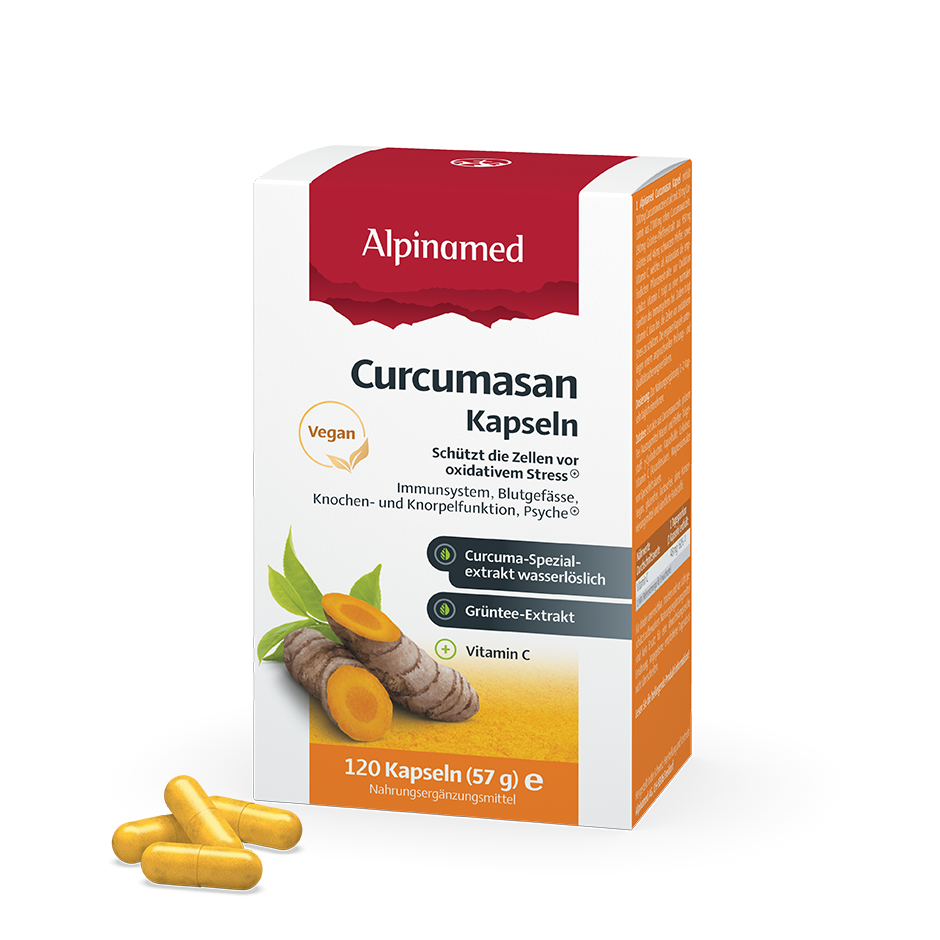
Curcumasan Capsules
Made from turmeric, green tea, black pepper and vitamin C.
Alpinamed
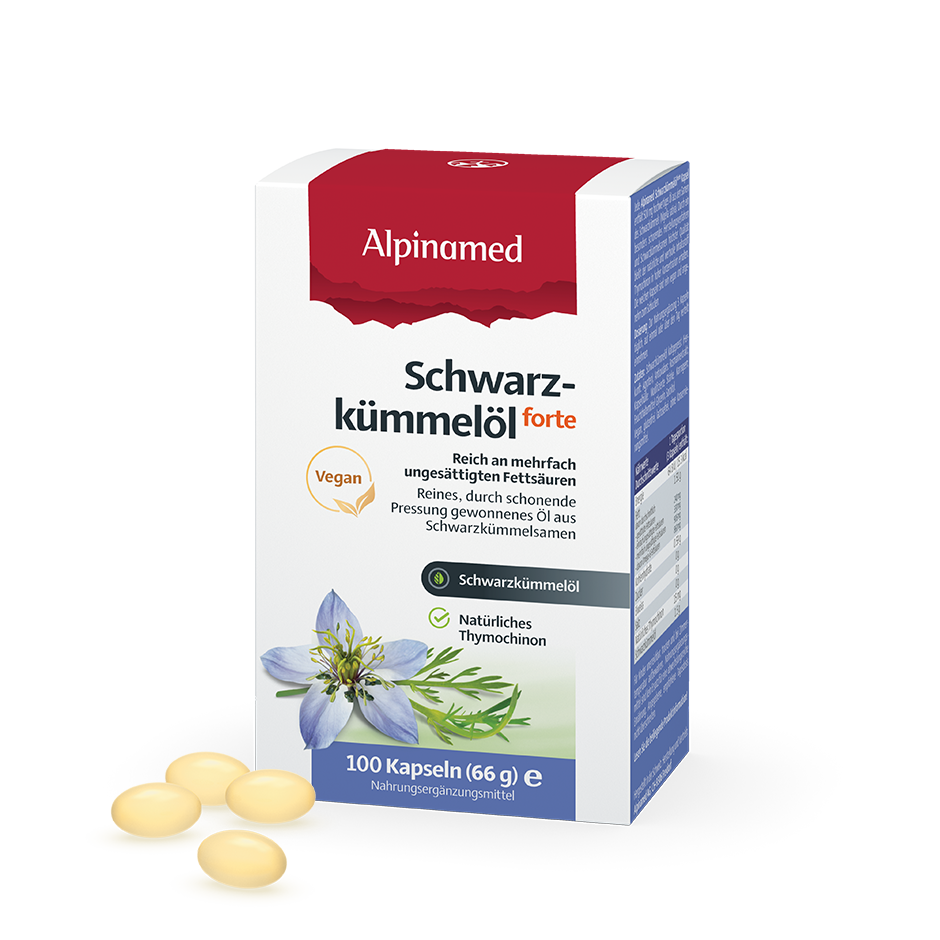
Black Cumin Oilforte Capsules
Naturally versatile, uniquely effective.
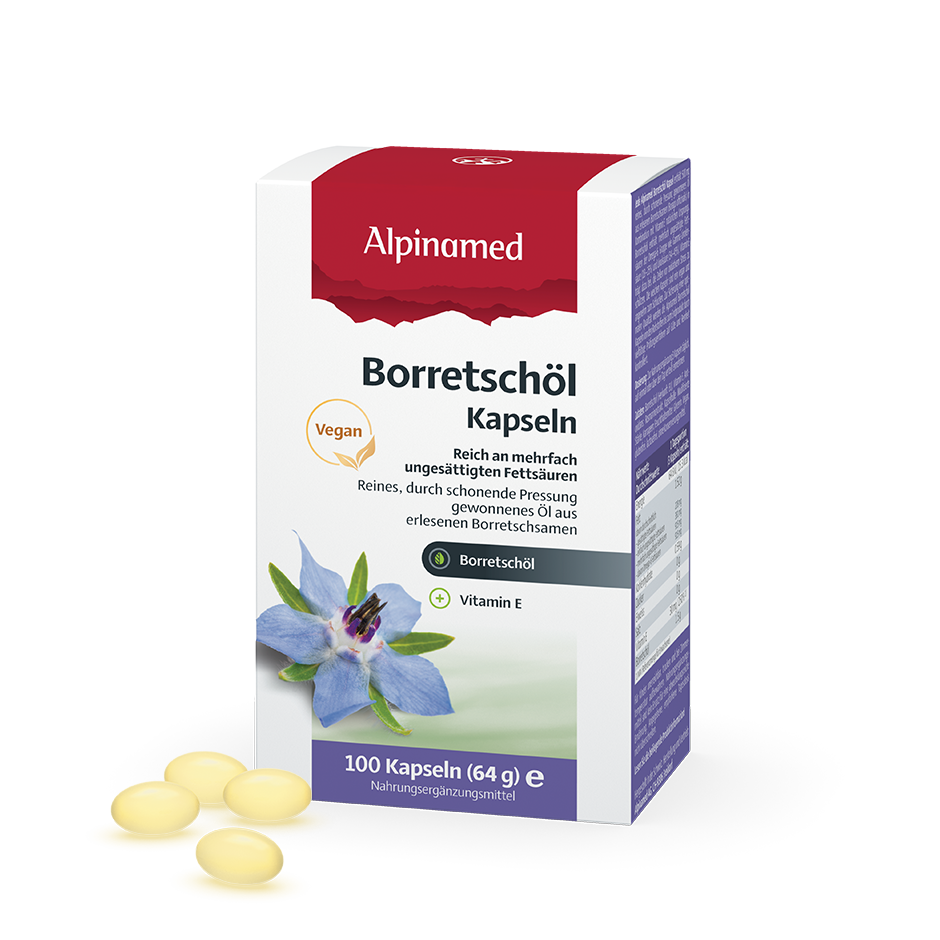
Alpinamed
Borage Oil Capsules
Beauty from within.